
Satrapal Power and Royal Policy – The Transformation of Inner Political Forces in the Achaemenid Empire
Abstract
After a first phase of dynamic expansion the Great Kings changed into a kind of ‘diplomatic policy’, particularly known from the western edge of the Achaemenid empire. Since Xerxes I they tried to use new methods for foreign policy, inter-state connections and indirect influence. This assumes a new understanding of the empire (with acceptance of fixed? borders) and of the royal ideology and representation. In consequence, the satraps gained importance as political representatives of the royal interests. Therefore, their function of their position seems to change from an originally focus on the administration of the regional, inner- Achaemenid conditions to a ‘diplomatic key figure’ at the border zone of the empire. But their new political, military and economic competences also strengthened their position towards the Great King. So, the increase of satrapal power seems to change the relationship to the Great King and the inner-political conditions. Obviously, the results are a tension of particularism at end of the 5th and in the 4th century BC and – in reaction to it – a regulation and modification of satrapal power by the Great King. This development, in which the imperium/the imperial territory shifted its importance in relation to the center, illustrates and characterizes the process of transformation to a ‘long-term empire’ the Achaemenid Great Kings were faced to manage.
Citation
Klinkott, Hilmar. "Satrapal Power and Royal Policy - The Transformation of Inner Political Forces in the Achaemenid Empire." Pourdavoud Institute: Achaemenid Workshop 2 (July 5, 2023).
About the Speaker
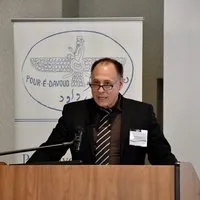
Hilmar Klinkott
University of Kiel
Hilmar Klinkott is Professor of Ancient History and History of the Near East at the Institute for Classical Studies/Department of Ancient History at the University of Kiel.
He studied Ancient History, Classical Archaeology, and Latin at the Ruprecht Carls University Heidelberg, earning his MA in 1997. He continued his studies at the University of Tübingen, earning his PhD in 2002. His thesis, Der Satrap: Ein achaimenidischer Amtsträger und seine Handlungsspielräume (Verlag Antike), was published in 2005.
After his habilitation in Ancient History at the University of Tübingen, he became Akademischer Rat in the Seminar für Alte Geschichte und Epigraphik at the Ruprecht Karls-Universität Heidelberg in 2012 and a member of the Heidelberg excellence cluster “Asia and Europe in a Global Context” in 2013. In the same year, he changed his habilitation to the University of Heidelberg (“Umhabilitierung”).
After Deputy Professorships in Hamburg (for Professor Christoph Schäfer, 2009–2010), Mannheim (for Professor Christian Mann, 2014/15) and Mainz (Professor Marietta Horster, 2016), he was appointed Full Professor at the Institut für Klassische Altertumskunde of the Christian Albrechts University. Now at the University of Kiel, Professor Klinkott continues to focus on the history of the ancient Near East and the Achaemenid empire.