
The Achaemenids between Tradition and Innovation: An Archaeological Perspective
Abstract
In the late decades of the sixth century B.C., the founding fathers of the Achaemenid Persian Empire conceived and created exceptional centers of power. New styles of monumental architecture and sculpture were introduced to express the Empire’s mastery of the ancient world. Within a span of less than 30 years this new Persian art achieved its most dynamic and genuine expression in the cities of Pasargadae, Persepolis, and Susa. Two major factors, individual and collective, played a significant role in the creation of this first and largest empire of the ancient world. On the individual level, it took the strong presence of charismatic rulers like Cyrus and Darius who brought the political unification of an immense area from the Aegean to the Indus. As for the collective level, the participation of a large number of nations was essential in providing technological and artistic tools for the creation of monumental centers, networks of communication, administrative apparatus, and an economic system of production and distribution. The present paper explores the continuity and change in this period as seen from an archaeological point of view.
Citation
Mousavi, Ali. "The Achaemenids between Tradition and Innovation: An Archaeological Perspective." Pourdavoud Institute: Achaemenid Workshop 2 (June 3, 2023).
About the Speaker
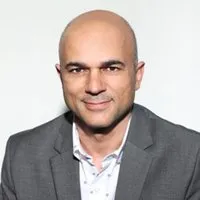
Ali Mousavi
University of California, Los Angeles
Ali Mousavi studied in Lyon, France, and took his B.A. in Art History, and his M.A. in Archaeology from the University of Lyon, France. He obtained his Ph.D. in Near Eastern archaeology from the University of California, Berkeley. He excavated in France, Turkey, and Iran, and contributed to the nomination of a number of archaeological sites and monuments on the World Heritage List of UNESCO. He is the author of a book on the site of Persepolis (Persepolis: Discovery and Afterlife of a World Wonder), and co-editor of two books: Ancient Iran from the Air, and Excavating an Empire. He has published on various aspects of Iranian art and archaeology, and holds a particular interest in the archaeology of Iranian Empires, from the Achaemenids to the Sasanians, and the history of archaeology in Iran and the Near East. He teaches art and archaeology of ancient Iran at UCLA. He is also the director of the Archaeological Gazetteer of Iran project.