
Video
Dura from the East: Iranian Impact on the Formation of Religious Arts across the Trade Routes of the Asian Continent during the 3rd–6th Centuries CE
About the Speaker
Zsuzsanna Gulácsi is a historian of Asian religious art specializing in the contextualized art historical study of pan-Asiatic religions that adapted their arts to a variety of cultures as they spread throughout the continent. He received a double major Ph.D. degree (1998) from Indiana University, Bloomington, in Central Eurasian studies (Old Uygur) and art history (Asian Art); and the equivalent of a double major MA degree (1990) from Loránd Eötvös University, Budapest, in historical ethnography and Turkic studies. His teaching career began at Sophia University in Tokyo in Japan, where he was a tenured assistant professor of Central Asian and Buddhist Art history (1999-2003). Since 2003, he has been teaching at Northern Arizona University in Flagstaff, where he was tenured in 2006 and promoted to the rank of a professor in 2012.
The bulk of his work so far has focused on the visual arts of a now extinct missionary world religion, Manichaeism, that existed in phases between the mid 3rd and the early 17th century across Asia. Having been trained in the discipline of art history, he knew from the start that Manichaean art was rarely studied by art historians. It was a much-neglected, but promising field. Therefore, he began to follow standard art historical methodology in his publications with the goal to ready Manichaean visual sources to be considered at the same level with the better-known and more-studied arts of other religious traditions.
Citation
Gulácsi, Zsuzsanna. "Dura from the East: Iranian Impact on the Formation of Religious Arts across the Trade Routes of the Asian Continent during the 3rd–6th Centuries CE," Ancient Iran and the Classical World, An International Symposium. May 30, 2019
About the Speaker
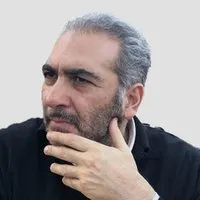
M. Rahim Shayegan
University of California, Los Angeles
M. Rahim Shayegan is Professor of Iranian and the Ancient Near East and the Eleanor and Jahangir Amuzegar Chair in the Department of Near Eastern Languages and Cultures (NELC) at UCLA. At UCLA, he also serves as the founding director of the Pourdavoud Institute for the Study of the Iranian World (established 2017), the founding director of the Yarshater Center for the Study of Iranian Literary Traditions (established 2023), as well as the founder and chair of Global Antiquity (established 2020), an academic unit of the Humanities.
Professor Shayegan received his PhD from Harvard University, Department of Near Eastern Languages and Civilizations, and was a Junior Fellow at the Harvard Society of Fellows before joining the NELC faculty at UCLA.
He has been the recipient of a Guggenheim Fellowship (2013–14), is a Foreign Member of the Academia Europaea, Section of Classics and Oriental Studies (2019–present); a Corresponding Member of the Austrian Academy of Sciences (ÖAW) (2021–present), and the invited Yarshater conférencier in November 2022 delivering five lectures at INALCO/Collège de France.
Professor Shayegan has authored and edited several books, among them: Arsacids and Sasanians: Political Ideology in Post-Hellenistic and Late Antique Persia (Cambridge UP, 2011); Aspects of History and Epic in Ancient Iran (Harvard UP, 2012); and Cyrus the Great: Life and Lore (Harvard UP, 2019). He is currently working on a number of volumes on the Achaemenid and Sasanian empires, among them Achéménides et Sassanides: Continuités et ruptures, which is the text of the cinq conférences delivered at INALCO/Collège de France; History of the Sasanian Empire (Cambridge University Press); and Ancient Iran and the West (Getty Publishers).
He is currently working on a number of volumes on the Achaemenid and Sasanian empires, among them Achéménides et Sassanides: Continuités et ruptures, the text of cinq conférences at INALCO/Collège de France; The World of Ancient Iran and the West (Getty Publishers), and Companion to the Sasanian Empire (Wiley-Blackwell). He is editor of a number of newly established series, among them Iran and the Ancient World with University of California Press (UCP).