Video
Ehsan Yarshater: A Homage
Ehsan Yarshater: A Homage
The Ehsan Yarshater Lecture Series are delivered by outstanding scholars whose work has distinctively impacted the study of theIranian Civilization. Each biennial lecture series consists of four to five lectures on a single theme that is subsequently elaborated and amplified into a monograph. The lectures represent original research and synthesis in all aspects of Iranian Studies, including archaeology and art history, as well as history, literature, the study of religions, and philosophy.
Citation
Daniel, Elton. "Ehsan Yarshater: A Homage," Ehsan Yarshater: A Homage. November 19, 2018.
About the Speakers
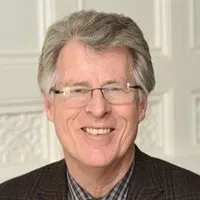
Rudi Mathee
University of Delaware
udi Matthee serves as the John and Dorothy Munroe Distinguished Professor of History at the University of Delaware, where he teaches Middle Eastern history, with a research focus on early modern Iran and the Persian Gulf. His books include The Politics of Trade in Safavid Iran: Silk for Silver, 1600-1730 (Cambridge University Press, 1999); The Pursuit of Pleasure: Drugs and Stimulants in Iranian History, 1500-1900 (Princeton University Press, 2005); Persia in Crisis: Safavid Decline and the Fall of Isfahan (I.B. Tauris, 2012); and, with Willem Floor and Patrick Clawson, The Monetary History of Iran. From the Safavids to the Qajars (I.B. Tauris, 2013). He co-edited, with Beth Baron, Iran and Beyond: Essays in Honor of Nikki R. Keddie (2000); co-edited, with Nikki Keddie, Iran and the Surrounding World, 1501-2001:Interactions in Culture and Cultural Politics (2002); and, with Jorge Flores, Portugal, the Persian Gulf and Safavid Persia (Peeters, 2011). His most recent edited volume is The Safavid World (Routledge, 2021). He has also published numerous articles on aspects of Safavid and Qajar Iran. He twice served as president of the Association for the Study of Persianate Societies, 2003-05 and 2009-2011, and currently serves as the president of the Persian Heritage Foundation. He received the 2006 Albert Hourani Book Prize, awarded by the Middle East Studies Association of North America, the Saidi Sirjani Award, 2004-2005, awarded by the International Society for Iranian Studies, the British-Kuwaiti Friendship Book Prize, 2012, and, twice, the prize for best foreign-language book on Iran from the Iranian Ministry of Culture.
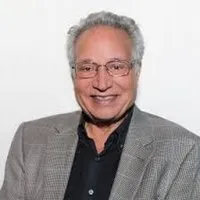
Ahmad Karimi-Hakkak
University of California, Los Angeles
Ahmad Karimi-Hakkak, an Emeritus Professor at the University of Maryland, is now a scholar of Persian and Iranian studies at UCLA's Department of Near Eastern Languages and Cultures. He received his doctoral degree in comparative literature at Rutgers University in 1979, taught Persian language and literature and Iranian culture and civilization at the University of Washington for close to two decades, and was elected President of the International Society of Iranian Studies in 2003. In 2004 he was invited to the University of Maryland to establish the Center for Persian Studies, he did that before retiring in 2018. He is the author, translator, editor, or co-editor of twenty-five books, among them An Anthology of Modern Persian Poetry (1978, Westview) Recasting Persian Poetry: Scenarios of Poetic Modernity in Iran (1995, University of Utah), Walking with the Wind, Poems by Abbas Kiarostami (Harvard Film Archive, 2001), Strange Times, My Dear (Arcades 2004), and most recently, A Fire of Lilies: Perspectives on Literature and Politics in Modern Iran (2019, Leiden University Press).
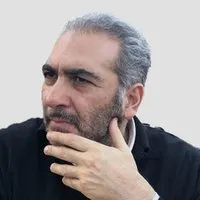
M. Rahim Shayegan
University of California, Los Angeles
M. Rahim Shayegan is Professor of Iranian and the Ancient Near East and the Eleanor and Jahangir Amuzegar Chair in the Department of Near Eastern Languages and Cultures (NELC) at UCLA. At UCLA, he also serves as the founding director of the Pourdavoud Institute for the Study of the Iranian World (established 2017), the founding director of the Yarshater Center for the Study of Iranian Literary Traditions (established 2023), as well as the founder and chair of Global Antiquity (established 2020), an academic unit of the Humanities.
Professor Shayegan received his PhD from Harvard University, Department of Near Eastern Languages and Civilizations, and was a Junior Fellow at the Harvard Society of Fellows before joining the NELC faculty at UCLA.
He has been the recipient of a Guggenheim Fellowship (2013–14), is a Foreign Member of the Academia Europaea, Section of Classics and Oriental Studies (2019–present); a Corresponding Member of the Austrian Academy of Sciences (ÖAW) (2021–present), and the invited Yarshater conférencier in November 2022 delivering five lectures at INALCO/Collège de France.
Professor Shayegan has authored and edited several books, among them: Arsacids and Sasanians: Political Ideology in Post-Hellenistic and Late Antique Persia (Cambridge UP, 2011); Aspects of History and Epic in Ancient Iran (Harvard UP, 2012); and Cyrus the Great: Life and Lore (Harvard UP, 2019). He is currently working on a number of volumes on the Achaemenid and Sasanian empires, among them Achéménides et Sassanides: Continuités et ruptures, which is the text of the cinq conférences delivered at INALCO/Collège de France; History of the Sasanian Empire (Cambridge University Press); and Ancient Iran and the West (Getty Publishers).
He is currently working on a number of volumes on the Achaemenid and Sasanian empires, among them Achéménides et Sassanides: Continuités et ruptures, the text of cinq conférences at INALCO/Collège de France; The World of Ancient Iran and the West (Getty Publishers), and Companion to the Sasanian Empire (Wiley-Blackwell). He is editor of a number of newly established series, among them Iran and the Ancient World with University of California Press (UCP).

Prods Oktor Skjærvø
Harvard University
A Norwegian with an early interest for languages, Prods Oktor Skjærvø learned several of them before studying French, Latin, Sanskrit, and comparative linguistics at the University of Oslo in the sixties. This in due course led him to Old Iranian studies, principally languages. After spending a year in Iran in the early seventies, he finished his studies and found himself jobless by 1979, the boost for Iranian studies in the West having evaporated together with Iranian royal ambitions. Having survived by the kind intercession of Professor H. Humbach as an assistant professor in Mainz, Germany, from 1980, teaching linguistics and Iranian studies and laying the foundation for a Scandinavian language program, he moved to the Big Apple in 1985. There he labored as an editor for the Encyclopaedia Iranica while biding time and waiting for the retirement of Richard Frye at Harvard, whom he wished to succeed and finally did succeed in 1991.
His current approach to Old Iranian studies by far exceeds his original interests: he teachs to whoever may be interested the Old (pre-Islamic) Iranian languages, religions (Zoroastrianism and Manicheism), and history.
His work over recent years has been centered on Avestan literature and the foundations of Zoroastrianism, as well as the application of Oral Literary Theory and comparative mythology to ancient Iranian literature and religion. He has also worked on developing teaching material for the old Iranian languages (Old Persian, Avestan, Pahlavi, Sogdian) and religions (Zoroastrianism and Manicheism).
Ali Gheissari Gheissari
University of San Diego
Ali Gheissari, teaches a wide range of courses on modern world history and the Middle East at. the University of San Diego. He has written extensively on the intellectual history and politics of modern Iran.
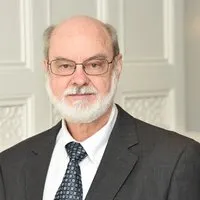
Elton Daniel
Columbia University
Professor Elton Daniel (A.B., University of North Carolina at Chapel Hill, 1970; Ph.D., University of Texas at Austin, 1978) taught Middle Eastern and Islamic History at the University of Hawaii from 1981 until his retirement in 2011. From 1997 to 2001, during periods of academic leave, he served as Associate Editor of the Encyclopaedia Iranica. He has also held visiting positions or fellowships at the University of Pennsylvania (1976), the University of Chicago (1980-81), the American University in Cairo (1988), and Oxford (1994-95) as well as research fellowships in Damascus, Istanbul, and Tehran. In addition to numerous articles and reviews, Professor Daniel has authored, co-authored, or edited volumes including The Political and Social History of Khurasan under Abbasid Rule (1979), A Shi’ite Pilgrimage to Mecca (1990), Qajar Society and Culture (2002), Culture and Customs of Iran (2006), and The History of Iran (2nd ed., 2012). He has continuing research interests in the history of early Islamic Iran, Islamic historiography in Persian and Arabic, and Persian travel literature of the Qajar period.