Frantz Grenet: A World between Worlds
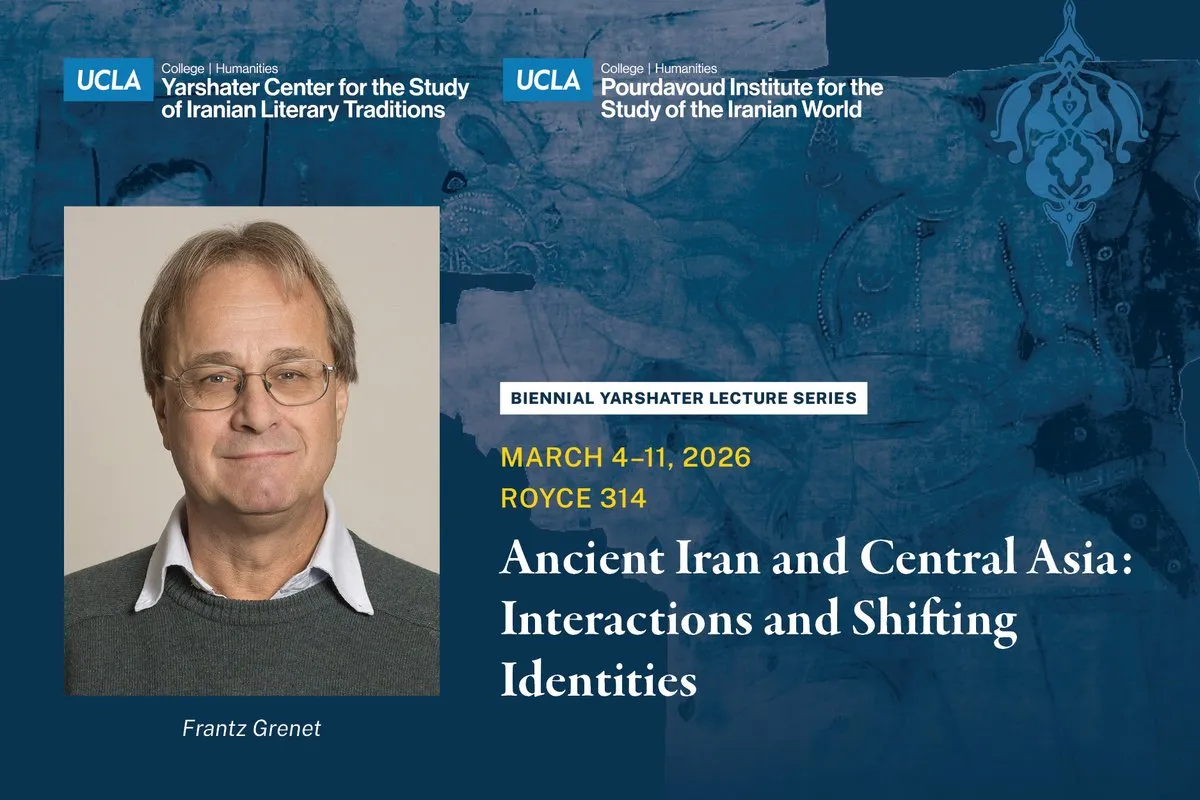
This lecture is part 1 of 4 of the 2026 Biennial Ehsan Yarshater Lecture Series, delivered by Frantz Grenet on the theme, “Ancient Iran and Central Asia: Interactions and Shifting Identities.”
Abstract
A World between Worlds: Geography, History, and Identity of the Early Kušāns (First Century CE)
This geographic and historical introduction to the Kušāns focuses on the multiple cultural affiliations and identities of the Kušān rulers and their empire, emphasizing the impact their neighbors had on identity formation and development.
Several vectors may have contributed to the development of Kušān identity. First, the historical heritage of the steppes prompts the question of the original language of the Yuezhi confederation, the cradle of the Kušān dynasty. This question is now being informed by the so-called “unknown script,” which has been deciphered and proven to be an early notation of the Bactrian language. Cultural interactions with their steppe neighbor to the north, the Kangju empire, certainly affected the Kušān worldview. This influence may be reflected in evidence such as their self-representation in the Khalchayan reliefs depicting a frontier war with the Kangju, whose own markedly bellicose identity is expressed on the Orlat bone plaque.
Second, the Hellenistic background of the Kušāns cannot be overlooked. The Kušāns experienced a unique mixture of steppe heritage (as seen at Tillia Tepe) and western influences through contact with the Roman East via maritime trade (as seen on Kujula Kadphises’s Augustan-style coinage).
Third, Hindu cults left a lasting impact on the Kušāns, which can be observed in the coinage of Vima Kadphises. Fourth, the relationship with the Parthians can be defined as one of “peaceful coexistence,” which was disrupted by the Sasanians’ rise to power, leading to territorial and commercial expansion that, however, had only limited effects in the religious sphere.
Event Video
Franz Grenet, Collège de France
About the Speaker
Frantz Grenet
Collège de France
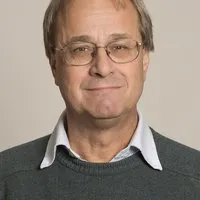
Frantz Grenet has been Professor at the Collège de France since 2013 and currently holds the chair of History and Cultures of Pre-Islamic Central Asia (Histoire et cultures de l’Asie centrale préislamique).
He studied at the École Normale Supérieure, Paris (1972–1977), focusing on the history and archaeology of Central Asia and the history of Zoroastrianism as his main fields of research. From 1977 to 1981, he was deputy director of the French Archaeological Delegation in Afghanistan (FADA) and participated in the excavations at Ai Khanum under the directorship of Paul Bernard. From 1981 to 2013, he was a research fellow at the Centre National de la Recherche Scientifique (CNRS), Paris.
Professor Grenet serves as director of the French-Uzbek Archaeological Mission in Sogdiana (1989–2014, and again since 2021), working mainly at Samarkand. Before taking up his position at the Collège de France, he was professor at the École Pratique des Hautes Études (1999–2014), holding the chair of Religions of the Ancient Iranian World. Professor Grenet is a member of the Académie des Inscriptions et Belles-Lettres (inducted 2022), a member of the American Philosophical Society (joined 2017), a fellow of the Institute for the Study of the Ancient World (member of the Advisory Board, 2013–2017), and a board member of the Corpus Inscriptionum Iranicarum. He is also an honorary citizen of Samarkand (2018). Professor Grenet served as president of the scientific committee of the exhibition Splendeurs des oasis d’Ouzbékistan (Louvre, November 23, 2022 – March 6, 2023).
His main publications include: Les pratiques funéraires dans l’Asie centrale sédentaire de la conquête grecque à l’islamisation (Paris, 1984); A History of Zoroastrianism, vol. 3, Zoroastrianism under Macedonian and Roman Rule (Leiden, 1991; with Mary Boyce); La geste d’Ardashir, fils de Pâbak (Die, 2003); and The Golden Journey to Samarkand (selected articles translated into Chinese; Guilin, 2017). He has most recently collaborated with Nicholas Sims-Williams on The ‘Ancient Letters’ and Other Early Sogdian Documents and Inscriptions (2023), and Bactrian Documents IV (2025) as part of the Corpus Inscriptionum Iranicarum. He has produced seven edited or coedited collective volumes and approximately 200 articles in peer-reviewed journals, published in French, English, Russian, Persian, Chinese, and Japanese.