Video
Contextualizing the Achaemenid-Persian Empire: What Does Empire Mean in the 1st Millennium BCE?
Contextualizing the Achaemenid-Persian Empire: What Does Empire Mean in the 1st Millennium BCE?
Looking at historical handbooks of the Ancient Near East, there appears to be a general agreement on structuring the outline of political history of the first millennium BCE. The epoch is conceptualized as a succession of three clearly defined empires. The first, the Neo-Assyrian empire, is regarded to represent a turning point in history by establishing imperial structures connected with a claim to rule the world. It is succeeded by the Neo-Babylonian empire and the Persian empire which, on the one hand, follow the previously introduced imperial trajectory but, on the other hand, shape their individual and distinctive conceptions of empire and state. With the conquests of Alexander the Great a major break is generally considered to have taken place. Ancient Near Eastern empires end and a fresh, western empire emerges intrducing a new era. Rollinger challenges this narrative by contemplating the meaning of empire in the first millennium BCE and the role the fringes of empire play in the dynamic relationship of interconnected regions and zones to which both the east and the west belonged.
About the Speaker
Robert Rollinger is Professor of Ancient History and Ancient Near Eastern Studies at Universität Innsbruck, Austria. He is a scholar of history and culture between the Aegean world and the ancient Near East. He has been a visiting professor at the Institute for the Study of Muslim Civilizations (AKU-ISMC) and the Institute for History (Jean Monnet Chair for European History) at Universität Hildesheim. In 2008, Rollinger became the first Austrian historian to be a member of the European Network for the History of Ancient Greece, which is dedicated to changes in ancient historical research.
Citation
Rollinger, Robert. "Contextualizing the Achaemenid-Persian Empire: What Does Empire Mean in the 1st Millennium BCE?," Pourdavoud Center Lecture Series. February 6, 2019.
About the Speaker
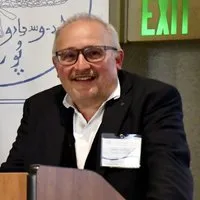
Robert Rollinger
University of Innsbruck
Robert Rollinger is Professor of Ancient History and Ancient Near Eastern Studies at the Leopold-Franzens University of Innsbruck. His main research areas are the history of the Ancient Near East and the Achaemenid Empire, contacts between the Aegean World and the Ancient Near East, ancient historiography, and the comparative history of empires. Recent publications include Imperien in der Weltgeschichte. Epochenübergreifende und globalhistorische Vergleiche (co-edited; 2014), Mesopotamia in the Ancient World. Impact, Continuities, Parallels (co-edited; 2015), Alexander und die großen Ströme. Die Flussüberquerungen im Lichte altorientalischer Pioniertechniken (2013), Short-term Empires in World History (co-edited; 2020), A Companion to the Achaemenid Persian Empire, 2 volumes (Blackwell Companions to the Ancient World) (co-edited; 2021), Empires to be Remembered (Studies in Universal and Cultural History) (co- edited; 2022) or Decline, Erosion and Implosion of Empires (Studies in Universal and Cultural History) (co-edited; 2022).