Video
Feudalism and its Characteristics in Ancient Iran
Feudalism and its Characteristics in Ancient Iran
The fifth and final lecture examines feudalism and vassalage as identified by various scholars in the Achaemenid, Arsacid, and Sasanian evidence. It considers the identification of leading individuals and families through the display of quasiheraldic tamgas and, in particular, the problematic interpretation of those associated with Ardavān, Ardašīr I, Šābūhr I, and several earlier Arsacid rulers, and it examines one particular case, illustrating the history of early modern Western engagement with Sasanian antiquities. It concludes by considering cognation and agnation in Sasanian succession, as part of the debate surrounding feudalism in ancient Iran.
About the Speaker
Daniel Potts is Professor of Ancient Near Eastern Archaeology and History in the Institute for the Study of the Ancient World (ISAW) at New York University. He received his AB (1975) and PhD (1980) in Anthropology from Harvard University, specializing in Near Eastern archaeology. He taught previously at the Freie Universität Berlin (1981-86), the University of Copenhagen (1980-81, 1986-1991) and the University of Sydney (1991-2012), where he held the Edwin Cuthbert Hall Chair of Middle Eastern Archaeology. His main areas of interest are greater Iran, Mesopotamia, and the Persian Gulf, and as a field archaeologist he has conducted numerous excavations, among others in Iran and Turkey. He is a Corresponding Member of the German Archaeological Institute and ISMEO (Associazione Internazionale di Studi sul Mediterraneo e l’Oriente), and is a Fellow of the Australian Academy of the Humanities.
Citation
Potts, Daniel. "Feudalism and its Characteristics in Ancient Iran," The Biennial Ehsan Yarshater Lecture Series. March 11, 2020
About the Speaker
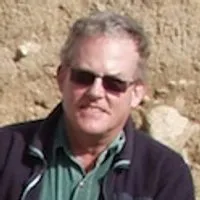
Daniel T. Potts
New York University
Daniel T. Potts is Professor of Ancient Near Eastern Archaeology and History at the Institute for the Study of the Ancient World, New York University. A member of the Harvard team that excavated Tepe Yahya in the 1970s, and co-director of the Iranian-Australian team at Tol-e Nurabad, Tol-e Spid, and Qaleh Kali (2003–2010), he has worked on many aspects of Iranian archaeology and history, from prehistory to the Qajar era.