Video
Persian Strongholds in the North
Abstract
The Achaemenid empire was the first world empire in history and one of the largest ever. But for most of modern archaeological investigation as a dicipline, it seemed to have left visible archaeological traces only in its ancient capital cities within the current borders of modern-day Iran. This landscape of narrow evidence, however, has changed fundamentally in recent decades. Surprisingly, the most impressive buildings and small finds that can be linked to the Persian rulers have not come to light in prominent parts of the empire such as Babylonia, Egypt, or Asia Minor, but in the Caucasus, Georgia, and Azerbaijan. Until the uncovering of buildings modelled on the residences of the Great Kings in the heartland, some scholars had even harbored serious doubts about the affiliation of this region with the Achaemenid empire. Since these discoveries have come to light, their importance in being part of a dense network of impressive complexes throughout the empire has solidified. There are many indications that these structures were built during the reign of Xerxes. They may therefore have been part of a large-scale consolidation program launched by this perhaps unjustly ill-named ruler in response to crushing defeats in the Persian Wars. Impressive architecture in eastern Georgia and western Azerbaijan also reveals a profound form of imitatio regis, which had, thorough studies of the small finds, been apparent for some time on the northern border of the empire.
Citation
Knauß, Florian. "Persian Strongholds in the North." Pourdavoud Center: Achaemenid Workshop 1 (April 13, 2023).
About the Speaker
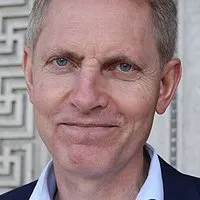
Florian S. Knauß
Staatliche Antikensammlungen und Glyptothek München
Florian S. Knauß is Director of the Staatliche Antikensammlungen und Glyptothek Muenchen. In addition, he is an elected member of the Commission for the Corpus Vasorum Antiquorum at the Bavarian Academy of Sciences. Between 1984 and 1992, he studied Classical Archaeology, Ancient History, Near Eastern Archaeology and Prehistory at the universities of Saarbruecken, Wuerzburg, and Berlin. After receiving his PhD at Saarbruecken with a dissertation on Der Lineare Inselstil (The Linear Island Style), he became a scientific employee at the Institute for Near Eastern Archaeology at the University of Saarbruecken (1993–1994). From 1994 until 2001, he was Assistant Professor at the Archaeologisches Seminar, University of Muenster. Since April 2001, Dr. Knauß has been Curator at the Staatliche Antikensammlungen und Glyptothek in Munich. In May 2011, he became Director of these museums. Since 1994, Dr. Knauß has conducted archaeological excavations in Georgia and Azerbaijan together with colleagues from Tbilisi and Baku.