Video
Rethinking P. Rylands Dem. 9 in the Scribal and Literary Culture of Saïte and Achaemenid Egypt
Abstract
P. Rylands Dem. 9 sits uneasily at the crossroads of literature and documentary practice. Written by a temple scribe during the ninth regnal year of Darius I (513 BCE) at the town of Teudjoi (modern El-Hibeh) in Middle Egypt, it is the longest early-Demotic text to have come down to us. It has been interpreted as a real petition, as a draft of one, as a family chronicle, and as a work of fiction. Its position in the history of Egyptian literature is especially intriguing, as it comes from a time when preserved literary texts are scarce, with the first significant Demotic narratives dating to the fourth to third centuries BCE. This paper will examine P. Rylands Dem. 9 in the context of the literary culture of Late Period Egypt and the wider Achaemenid Empire, in order to provide a more nuanced understanding of its place within it.
Citation
Poveda, Marina Escolano. "Rethinking P. Rylands Dem. 9 in the Scribal and Literary Culture of Saïte and Achaemenid Egypt," Achaemenid Workshop 3 (February 22, 2025).
About the Speaker
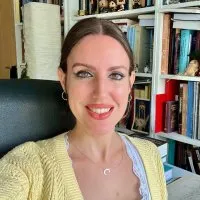
Marina Escolano Poveda
University of Liverpool
Marina Escolano-Poveda is a Senior Lecturer in Classics/Ancient History and Egyptology at the Department of Archaeology, Classics and Egyptology of the University of Liverpool. She holds a Ph.D. in Near Eastern Studies (Egyptology, with minor in Ancient Greek) from the Johns Hopkins University, 2017. She started her doctoral studies in the United States as a Fulbright Scholar. Before this she had completed a 5-year Licenciatura in History (equivalent to a British BA + 2-year MA) at the Universidad Autónoma de Madrid, being awarded at its completion the First Place National Award of Excellence in Undergraduate Academic Performance, Class of 2009 (Primer Premio Nacional de Fin de Carrera, Promoción de 2009). From 2018 to 2021 she worked as full-time fixed-term Lecturer in Egyptology at the University of Liverpool. In 2019, she became a Fellow of the Alexander von Humboldt Foundation (FAvH), with a research project on the Graeco-Egyptian Hermetica at the Eberhard Karls Universität Tübingen (host: Prof. Dr. Christian Leitz). She spent the academic year 2021–22 as full-time permanent Lecturer in Egyptology at the University of Manchester. In 2022, she returned to the University of Liverpool as permanent Lecturer in Classics/Ancient History and Egyptology, and she has been promoted to Senior Lecturer in the 2023 Academic Annual Review by the Faculty Review Committee for Humanities and Social Sciences at the University of Liverpool.
Her research focuses on the literature, religion, philosophy, and society of Graeco-Roman Egypt. She is particularly interested in the study of the intellectual milieu of the Egyptian temples of the Graeco-Roman period, and the role of the Egyptian priesthood in the creation and transmission of knowledge in the Ancient and Late Antique worlds. Within this research area, she currently works on the analysis of Graeco-Egyptian astronomical/astrological and early alchemical sources, as well as the Greek Hermetica from an Egyptological perspective. She is also involved in the edition of papyri and ostraca from different international collections. She is currently part of the Athribis-Projekt of the Eberhard Karls Universität Tübingen as specialist in astronomy/astrology, in which she is editing newly discovered astral ostraca (including the largest collection of Demotic horoscopes from Egypt). She is also developing a major project with Prof. Kim Ryholt (University of Copenhagen) for the edition and interpretation of a collection of Demotic handbooks on decanal astrology. Between 2022 and 2024 she worked on the conservation project of P. Rylands 9, being in charge of the reconstruction of the papyrus roll (project organised by the collections team at the John Rylands Research Institute and Library, funded by the National Manuscripts Conservation Trust). She has contributed to the re-edition of the bilingual magical formularies within the project "Traditions of Magical Knowledge. The Papyrus Magical Handbooks in Context" of the University of Chicago (volume published in 2022).
She combines her philological work with fieldwork in Egypt since 2007. She was a member of the Egypt Exploration Society/Durham University archaeological expedition to Saïs (Sa el-Hagar, Egypt) between 2007 and 2010 (Deputy Director of the expedition in 2009). From 2011 to 2018 she was part of the team of the Johns Hopkins University archaeological expedition to the Mut Temple at Karnak (Luxor, Egypt), where she worked as trench supervisor and archaeological illustrator. She also has extensive archaeological experience in Spain, having worked in sites from prehistoric to medieval times.