Video
The Achaemenid Persian Empire and the West: A Structural Approach
Abstract
This paper intends to offer a new perspective on the Achaemenid Persian empire and its interaction with the Greek world. It questions the alleged special role of the West and argues for a more balanced and less Hellenocentric view, thereby, focusing on imperial structures and taking a more general look at imperial borderlands and their relationship with the center. These border regions, like the Levant and the Aegean world, exhibited some shared features due to their position on the edges of the empire. Seen from the center – through the lens of the imperial ideology – they appeared as peripheral zones, but still under the firm control of the Great King. However, from a structural point of view they were not “peripheral” at all, but represented a category of their own, with a very specific dynamic that made them simultaneously subject to antinomic forces. While they maintained close ties with the imperial center, they still constituted an outside world. They were part of the empire, but at the same time deeply connected with a world beyond the empire’s direct reach. They formed an area of communication between “inside” and “outside,” between “this side” and the “other side.” This intermediate position offered a wide range of possibilities, but also carried sundry risks and dangers. This is especially true for the main historical agents, i.e., the local elites. Contact with the imperial administration and economy opened up a new world, prompted internal development and the transformation of local power structures. The empire can be viewed as an object of admiration and emulation, while at the same time evoking notions of aversion and rejection. This ambiguity decisively characterized the development of the Greek world, which it shared with other borderlands of the empire.
Citation
Rollinger, Robert. "The Achaemenid Persian Empire and the West: A Structural Approach." Pourdavoud Center: The World of Ancient Iran and the West (May 19, 2022).
About the Speaker
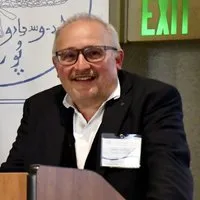
Robert Rollinger
University of Innsbruck
Robert Rollinger is Professor of Ancient History and Ancient Near Eastern Studies at the Leopold-Franzens University of Innsbruck. His main research areas are the history of the Ancient Near East and the Achaemenid Empire, contacts between the Aegean World and the Ancient Near East, ancient historiography, and the comparative history of empires. Recent publications include Imperien in der Weltgeschichte. Epochenübergreifende und globalhistorische Vergleiche (co-edited; 2014), Mesopotamia in the Ancient World. Impact, Continuities, Parallels (co-edited; 2015), Alexander und die großen Ströme. Die Flussüberquerungen im Lichte altorientalischer Pioniertechniken (2013), Short-term Empires in World History (co-edited; 2020), A Companion to the Achaemenid Persian Empire, 2 volumes (Blackwell Companions to the Ancient World) (co-edited; 2021), Empires to be Remembered (Studies in Universal and Cultural History) (co- edited; 2022) or Decline, Erosion and Implosion of Empires (Studies in Universal and Cultural History) (co-edited; 2022).