Video
The Development of Local Identity as Imperial Integration Process in Achaemenid Asia Minor: The Examples of Caria and Lycia
Abstract
In Achaemenid royal representations the concept of empire is visualized by the plurality of its regions and/or peoples. The identifiability of these artistic depictions holds great consequences: the identity of unique peoples or countries seems to be a core element in defining the Great King’s rule over the whole of the Achaemenid empire. Based on this specific ideological concept, the embracing of a pluricultural policy by the Great Kings resulted in the protection and support of the development and maintenance of local identities. In particular, Caria and Lycia illustrate in a paradigmatic way how local identity in Asia Minor was shaped on a cultural level by art, architecture, and literature. This process of local identity development and preservation, accompanied by simultaneous political and administrative changes, triggered the embodying of a political identity which finally culminated in local tendencies for administrative autonomy and political particularism. Beyond this identity renegotiation, the examples of Caria and Lycia reflect a specific policy of imperial integration based on and justified by Achaemenid support of local identities.
Citation
Klinkott, Hilmar. "The Development of Local Identity as Imperial Integration Process in Achaemenid Asia Minor: The Examples of Caria and Lycia." Pourdavoud Center: Achaemenid Workshop 1 (April 13, 2023).
About the Speaker
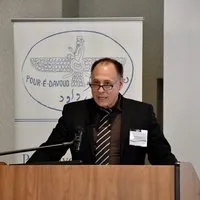
Hilmar Klinkott
University of Kiel
Hilmar Klinkott is Professor of Ancient History and History of the Near East at the Institute for Classical Studies/Department of Ancient History at the University of Kiel.
He studied Ancient History, Classical Archaeology, and Latin at the Ruprecht Carls University Heidelberg, earning his MA in 1997. He continued his studies at the University of Tübingen, earning his PhD in 2002. His thesis, Der Satrap: Ein achaimenidischer Amtsträger und seine Handlungsspielräume (Verlag Antike), was published in 2005.
After his habilitation in Ancient History at the University of Tübingen, he became Akademischer Rat in the Seminar für Alte Geschichte und Epigraphik at the Ruprecht Karls-Universität Heidelberg in 2012 and a member of the Heidelberg excellence cluster “Asia and Europe in a Global Context” in 2013. In the same year, he changed his habilitation to the University of Heidelberg (“Umhabilitierung”).
After Deputy Professorships in Hamburg (for Professor Christoph Schäfer, 2009–2010), Mannheim (for Professor Christian Mann, 2014/15) and Mainz (Professor Marietta Horster, 2016), he was appointed Full Professor at the Institut für Klassische Altertumskunde of the Christian Albrechts University. Now at the University of Kiel, Professor Klinkott continues to focus on the history of the ancient Near East and the Achaemenid empire.