Contextualizing Iranian Religions in the Ancient World: 14th Melammu Symposium
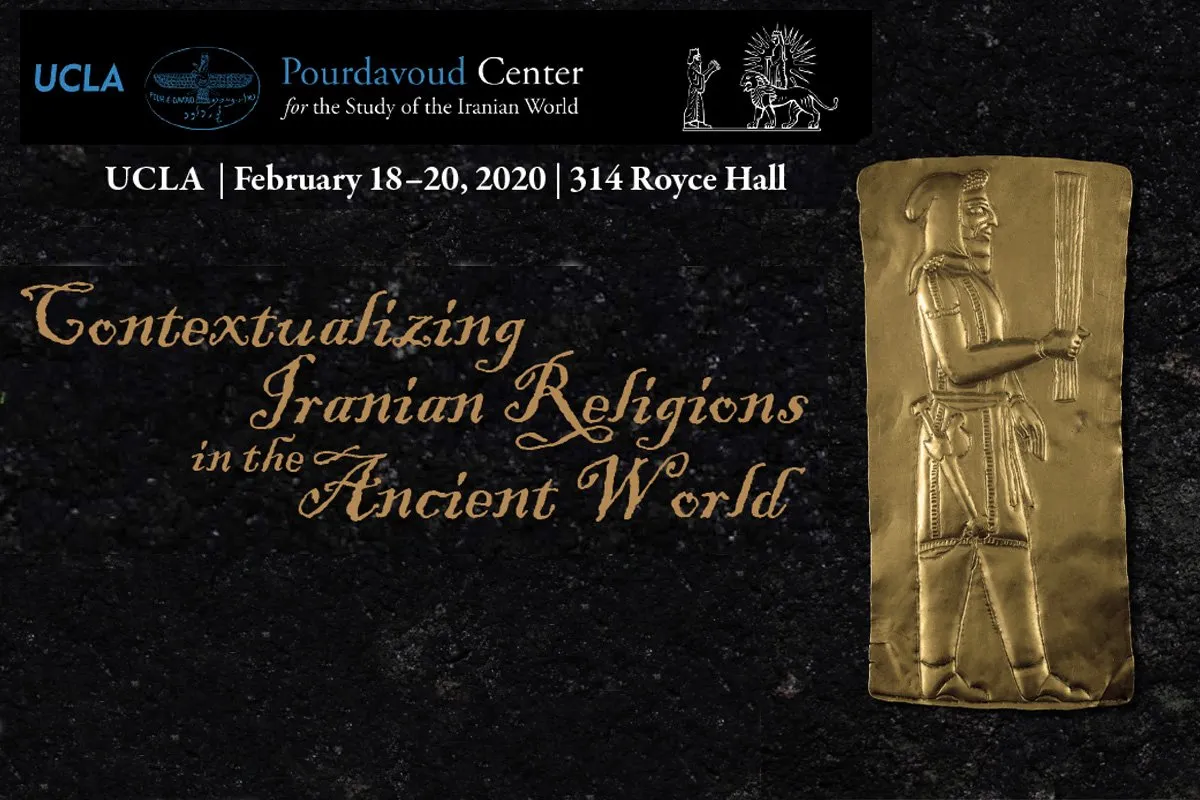
Fourteenth Symposium of the Melammu Project, Convened by:
M. Rahim Shayegan, UCLA
About the Event
The Pourdavoud Center for the Study of the Iranian World is convening the 14th Melammu Symposium at UCLA. The international three-day symposium held at Royce Hall will explore Iranian religions in light of ancient Near Eastern traditions and precedents. It hosts scholars whose work pertain to the interchange of ideas and practices between the ancient Near East, Egypt, the Classical and Hellenistic worlds, and ancient Iran. The overarching themes of the symposium encompass: Elam, the Ancient Near East, and Persia; Ancient Egypt and Persia; the Divine in Achaemenid Material Culture; (Post-)Achaemenid Religious Practices in Literary Traditions; Religions and Religious Policy in the Hellenistic and Arsacid Worlds; and the Religious Landscape of the Sasanian World.
Event Videos
Ali Mousavi, University of California, Los Angeles
Gonzalo Rubio, Pennsylvania State University
Matthew Waters, University of Wisconsin-Eau Claire
Simonetta Ponchia, University of Verona
Daniel Beckman, Princeton University
Salvatore Gaspa
Elizabeth Carter, University of California, Los Angeles
Robert Rollinger, University of Innsbruck
Julian Degen, University of Trier
Daniel Beckman, Princeton University
Krzysztof Nawotka, University of Wrocław
Deirdre Klokow, University of Southern California
Henry P. Colburn, New York University
Matthew Canepa, University of California, Irvine
Vito Messina, University of Torino
Damien Agut-Labordère, French National Center for Scientific Research
Emma Petersen, University of California, Los Angeles
Mark Garrison, Trinity University
Jonathan Winnerman, University of California, Los Angeles
Hilmar Klinkott, University of Kiel
Kathlyn (Kara) Cooney, University of California, Los Angeles
Touraj Daryaee, University of California, Irvine
Johannes Haubold, Princeton University
Rolf Strootman, Utrecht University
Kai Ruffing, University of Kassel
Christelle Fischer-Bovet, University of Southern California
Marissa Stevens, University of California, Los Angeles