Video
The Cryptographic Titulary of Darius at Hibis
Abstract
There are numerous writings of the names and titles of Darius I in Egyptian hieroglyphs within the temple of Hibis, located in Egypt’s Kharga Oasis. Most of these resemble Darius’ hieroglyphic titulary on other Egyptian monuments, where pharaonic elements are occasionally interspersed with traditional Persian royal epithets. Several examples at Hibis are unique, however, in that they present his titulary not in normal hieroglyphs, but in cryptography. Cryptography, which had previously seen limited use in Egypt outside the royal tomb, frequently employed intentionally obscure lists of divinities, detailed human and animal figures, or sacred objects to write phrases normally conveyed by simpler hieroglyphs. In this way, the imagery of such writings may be compared to the presentation of Egyptian divinities elsewhere at Hibis, which may reflect a Persian desire to organize and order the complex web of Egyptian religion. At the same time, cryptography also had a deep, Egyptian religious significance. This is especially true in the context of the theology of Amun, whose name literally means “He Who is Hidden.” This talk will examine these cryptographic texts as unique examples for how Iranian and Egyptian religious systems may have combined and intermingled. Rather than attempting to determine the degree of Iranian influence inherent in them, it will be argued that these texts may represent a single expression that could have had important religious significance for both Iranian and Egyptian audiences.
Citation
Winnerman, Jonathan. "The Cryptographic Titulary of Darius at Hibis," Contextualizing Iranian Religions in the Ancient World - 14th Melammu Symposium. February 18, 2020.
About the Speaker
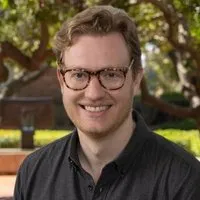
Jonathan Winnerman
University of California, Los Angeles
Jonathan Winnerman is Academic Administrator for Ancient Studies at UCLA, where he assists with the research and operations of the new Institute for the Study of Global Antiquity. He earned his PhD from the University of Chicago in 2018. Specializing in the ancient Egyptian language and Egyptian religion, his academic work focuses on the creation and expression of authoritarian power in ancient Egypt and beyond. He worked in Egypt for many years, most notably as a team member of the Epigraphic Survey of the Oriental Institute, University of Chicago.