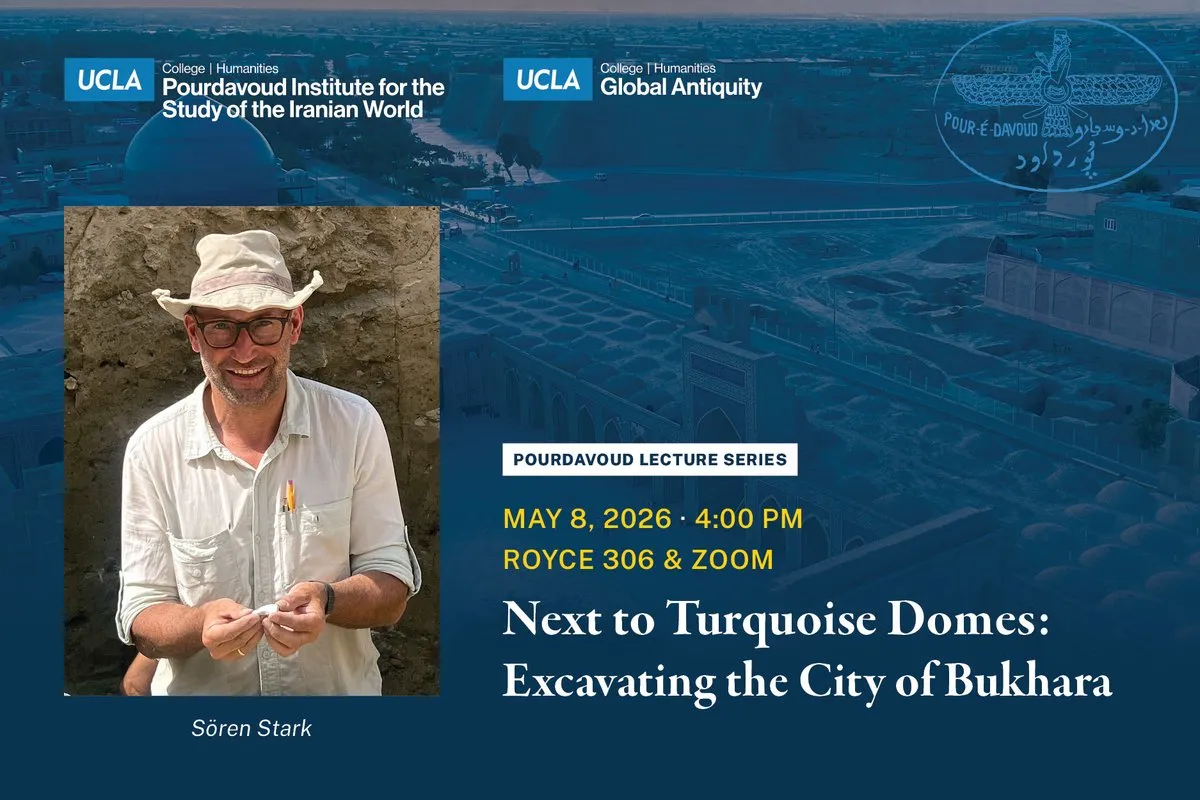
Sören Stark: Excavating the City of Bukhara
Co-Sponsored by:
The Pourdavoud Institute
Global Antiquity
Abstract
Next to Turquoise Domes: Excavating the City of Bukhara
The city of Bukhara was once a key node along the fabled “Silk Roads.” Yet compared to other Central Asian cities of comparable importance, the systematic archaeological investigation of Bukhara lacks considerably behind. This is now rapidly changing thanks to excavations conducted since 2020 by the Uzbek-American Expedition to Bukhara, co-directed by Jamal K. Mirzaakhmedov and the presenter, in a recently cleared area of ca. 0.8 ha next to the city’s ancient citadel and its main congregational mosque.
Six extensive seasons of archaeological fieldwork have yielded a veritable treasure trove of new information about Bukhara’s long and complex history. This presentation will introduce new data derived from finds and observations made at a series of fortifications, various kinds of dwellings, workshops, as well as burial contexts – all encountered in the excavation area. They speak to a wide range of historical phenomena and problems, such as the potential existence of a Seleucid military colony in the area of the later city during the third century BCE, the roots and stages of Bukhara’s urban growth as an important node within the Sogdiana trading networks during Late Antiquity (third to eighth centuries CE), transcontinental connections during the city’s hey-day under the Samanid dynasty during the tenth century, and the health status of the urban populace on the eve of the Mongol invasion (late twelfth/early thirteenth century).
Event Video
Sören Stark, New York University
About the Speaker
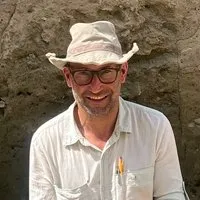
Sören Stark
New York University
Sören Stark is Professor of Central Asian Archaeology at NYU’s Institute for the Study of the Ancient World. He received his PhD in 2005 at the University Halle-Wittenberg (Germany) with a dissertation on the history and archaeology of Türk Empire in Central Eurasia between the sixth and eighth centuries CE. His publications include two monographs, an exhibition catalogue, and more than 70 single and co-authored articles and book chapters. He is co-editor of Brill’s Handbook of Oriental Studies, Section 8: Uralic & Central Asian Studies (HO8), and member of the advisory board for the journals Studies in Late Antiquity, Silk Roads Archaeology and Heritage, and O’zbekiston Arxeologiyasi (Archaeology of Uzbekistan).
Stark has more than twenty years of experience in co-directing archaeological fieldwork in Central Asia (Tajikistan and Uzbekistan). Since 2011 he has co-directed the Uzbek-American Expedition to Bukhara, which is currently conducting multidisciplinary investigations at the Final Bronze Age site of Kimirek-kum 1 in the prehistoric delta of the Zerafshan river (now part of the Kyzyl-kum desert), and in the old city center of Bukhara, exploring contexts dating between the late Achaemenid period and the Mongol invasion. His previous fieldwork in Tajikistan and Uzbekistan focused on Bronze Age petroglyphs, Iron Age kurgans, early medieval fortresses, and pre-Mongol high-mountain settlements.