Video
Elephantine Goes Global: Island of the Millennia
Abstract
Over a period of ten years a research project funded by the European Research Council (ERC) was conducted at the NationalMuseums in Berlin entitled “Localizing 4000 years of Cultural History. Texts and Scripts from Elephantine Island in Egypt.”Elephantine is an island on the Nile River in southern Egypt. Some of the research results are the digitalization, transcription,and translation of more than 10,000 texts written on papyrus or clay shards in ten different languages and scripts, includinghieroglyphics, Hieratic, Aramaic, Coptic, and Arabic. Following this research, an exhibition was carried out on Berlin’s Mu-seum Island, entitled: “Elephantine. Island of the Millennia.” The online version of this exhibition has been made availablevery recently and will be discussed here. The entire exhibition is trilingual, carried out in Arabic, English, and German, andwas put together in close collaboration with the Egyptian Ministry for Tourism and Antiquities. Museums and research canfunction as soft power. The exhibition and this talk showcase the relevance of 4,000 years of cultural history across severaldifferent ancient ethnic groups, including contemporary art. Thus “Elephantine Goes Global” now.
Citation
Lepper, Verena. "Elephantine Goes Global: Island of the Millennia," Pourdavoud Lecture Series (25 February 2026).
About the Speaker
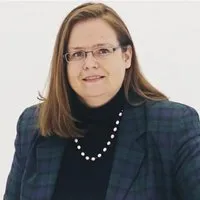
Verena Lepper
Getty Villa/J. Paul Getty Museum
Verena Lepper is the Head of the Department of Antiquities at the Getty Villa and joined the J. Paul Getty Museum in October 2025. A distinguished Egyptologist and curator, she served for eighteen years as Curator of Egyptian and Oriental Papyri at the Egyptian Museum and Papyrus Collection, Berlin (National Museums Berlin). Lepper has led major international exhibitions and research projects in Germany and abroad, including in Doha, Abu Dhabi, and at Harvard University. She also directed the Institute of Ancient Near Eastern and Hellenistic Religion at Humboldt University in Berlin. Her research focuses on Egyptian and Oriental papyri, language and religion, as well as literary and cultural history, and the history of science and the arts. To strengthen cultural diplomacy between Germany and the Arab world, she founded in 2013 the Arab German Young Academy of Sciences and Humanities (AGYA), which she continues to lead. She serves on several committees and supervisory boards focused on cultural and science policy. She was educated at Bonn, Oxford and Harvard University and is the author of twenty books and numerous articles for which she received several awards.