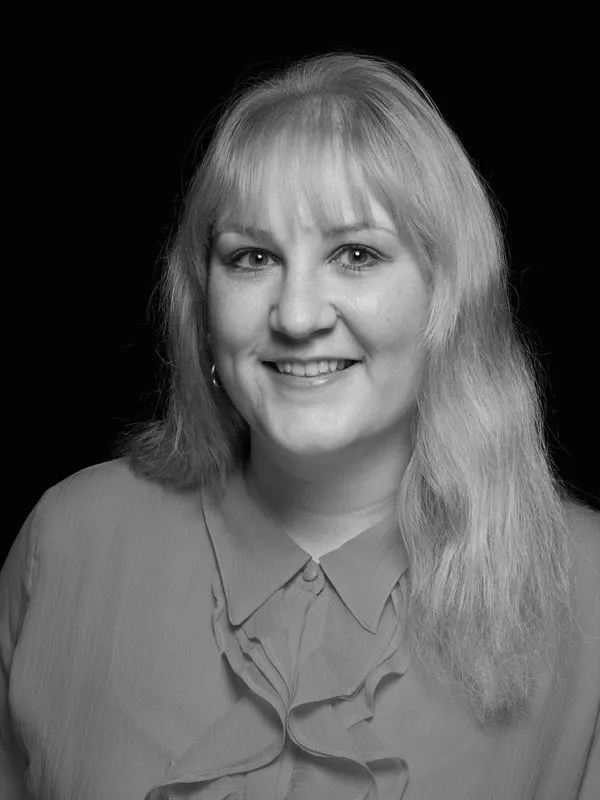
Marissa Stevens
Managing Associate Director
Email: stevensma@humnet.ucla.edu

Biography
Marissa Stevens is the Managing Associate Director of the Pourdavoud Institute for the Study of the Iranian World and Yarshater Center for the Study of Iranian Literary Traditions.
Trained as an Egyptologist who studies the materiality, social history, and texts of the Third Intermediate Period and Late Period, she first earned an Honors BA in History and Sociology from Washington & Jefferson College and an MA from the University of Chicago, before completing her PhD at the University of California, Los Angeles in the Department of Near Eastern Languages and Cultures.
Her dissertation focused on 21st Dynasty funerary papyri to determine funerary iconography’s role in defining an individual’s social identity, specifically with respect to titles, social position, family lineage, and gender of the Theban elite. Combining art historical and linguistic approaches, her research interests focus on how objects can solidify, maintain, and perpetuate social identity, especially in times of crisis when more traditional means of self-identification are absent.
Education
- PhD, Egyptology • University of California, Los Angeles, 2018
- CPhil, Egyptology • University of California, Los Angeles, 2015
- MA, Social Sciences • University of Chicago, 2011
- Honors BA, History and Sociology, Summa Cum Laude • Washington & Jefferson College, 2010
Publications
Book Chapters
Barbieri-Low, Anthony J. and Marissa Stevens, “Providing a Model Afterlife,” Ancient Egypt and Early China: State, Society, and Culture, editor Marissa Stevens (Seattle: University of Washington Press, 2021), 171-206.
Articles
“The Utilization of Collective Memory to Legitimize Persian Kingship in Egypt,” Proceedings of the 14th Melammu Symposium:18-20 February 2020, editorM. Rahim Shayegan (Wien: Verlag der Österreichischen Akademie der Wissenschaften, in press).
“Unfinished Funerary Papyri and What It Reveals about Commission, Production, and Usage,” From Thebes to Tanis: Egypt in the 21st Dynasty, editor Rogério Sousa (Rome: L’erma di Bretschneider, in press).
“Persian Influences on Egyptian Perspectives: Demonstrating Authority through Nuance,” Proceedings from the Second Achaemenid Workshop: July 3-7, 2023, Obergurgl, Austria, editors M. Rahim Shayegan and Robert Rollinger (Wiesbaden: Harrassowitz, in press).
“Ägyptische Quellen,” Das achaimenidisch-persische Imperium (Springer Companion Geschichte), editor Julian Degen (Wiesbaden: Springer, 2025) 493–506.
“Reactionary Functions of 21st Dynasty Funerary Papyri towards Coffin Reuse,” Proceedings of the Second Vatican Coffin Conference:6-9 June 2017, editorsAlessia Amenta and Agnese Iob (Vatican City: Musei Vaticani Città del Vaticano, 2025) 627–640.
“Layered Meanings: Spears, Enemies, and Achaemenid Iconography through Egyptian Eyes,” Navigating the Worlds of History: Studies in Honor of Robert Rollinger on the Occasion of His 60th Birthday, editors Kai Ruffing, Brigitte Truschnegg, Andres Rudigier, Julian Degen, Sebastian Fink, and Kordula Schnegg (Wiesbaden: Harrassowitz, 2024) 1079–1090.
“Through the Eyes of the Beholder: Motifs (Re)Interpreted in the 27th Dynasty,” Ancient Egyptian Art Studies: Art in Motion, a Social Tool of Power and Resistance, editors Kathlyn Cooney and Alisée Devillers, Arts 13, no. 3: 76(MDPI, 2024).
“Comparing the Civilizations of Ancient Egypt and Early China,” Ancient Near East Today, Vol. X, No. 3, editor Alexander Joffe (American Society of Overseas Research, March 2022).
Mousavi, Ali and Marissa Stevens, “The UCLA Archaeological Gazetteer of Iran: Excavations of Ancient Sites in a Digital Age,” Backdirt: Annual Review of the Cotsen Institute of Archaeology at UCLA (Los Angeles: UC Regents, 2021) 76–81.
“Neith as Legitimator: Persian Religious Strategy and Udjahorresnet,” The Journal of Ancient Egyptian Interconnections – Special Issue: Udjahorresnet and His World, editors Melanie Wasmuth and Pearce Paul Creasman (University of Arizona, 2020) 185-194.
“Family Associations Reflected in the Materiality of 21st Dynasty Funerary Papyri,” Invisible Archaeologies: Hidden aspects of daily life in ancient Egypt and Nubia, editor Loretta Kilroe (Oxford: Archaeopress, 2019) 26-55.
“Illustrations of Temple Rank on 21st Dynasty Funerary Papyri,” Current Research in Egyptology 2018: Proceedings of the Nineteenth Annual Symposium, Czech Institute of Egyptology, Faculty of Arts, Charles University, Prague, 25-28 June 2018, editors Dana Bělohoubková, Jiří Honzl, Věra Nováková, and Marie Peterková Hlouchová (Oxford: Archaeopress, 2019) 162-228.
Arbuckle MacLeod, Caroline, Elsbeth Geldhof, Marissa Stevens, and Kathlyn Cooney, “The Life of the Egyptian Coffin: Preliminary Report,” Backdirt: Annual Review of the Cotsen Institute of Archaeology at UCLA (Los Angeles: UC Regents, 2016) 32-37.
Stevens, Marissa and Kathlyn Cooney, “The Ongoing Study of Coffin Reuse in 21st Dynasty Egypt,” Backdirt: Annual Review of the Cotsen Institute of Archaeology at UCLA (Los Angeles: UC Regents, 2015) 42-47.
Book Reviews
“Book Review: Rogério Sousa, Burial assemblages from Bab el-Gasus in the geographical society of Lisbon. Monumenta Aegyptiaca, 14. Turnhout: Brepols, 2017. xiv, 290 p. €89,00 (pb). ISBN 9782503565750,” Bryn Mawr Classical Review (December 2017).
“Book Review: France Jamen, Le cercueil de Padikhonsu au musée des Beaux-Arts de Lyon (XXIe dynastie), Studien zu altägyptischen Totentexten 20 (Wiesbaden: Harrassowitz Verlag, 2016). ISBN 9783447103725. Pp. xii +240.,” Journal of the American Research Center in Egypt, Vol. 52 (2016) 353-355.
Encyclopedia Entries
“Kharga Oasis/Hibis,” UCLA Archaeological Gazetteer of Iran, editor Ali Mousavi (Los Angeles: UC Regents, 2025) https://irangazetteer.ucla.edu/catalogue/kharga-oasis-hibis/ (https://irangazetteer.ucla.edu/catalogue/kharga-oasis-hibis/).
“Tomb Robbery,” All Things Egyptian: An Encyclopedia of the Ancient Egyptian World, editor Lisa K. Sabbahy (Santa Barbara: ABC-CLIO, 2019) 538-41.
“Egyptian Mummies,” “Opening of the Mouth,” “Theban Necropolis,” and “The Egyptian Exhibit, The British Museum,” Mummies around the World: An Encyclopedia of Mummies in History, Religion, and Popular Culture, editor Matt Cardin (Santa Barbara: ABC-CLIO, 2014).
“Ammit,” “Amun,” Amun-Re,” “Aten,” “Atum,” “Horus,” “Introduction,” “Isis,” Mut,” “Osiris,” “Ptah,” “Re,” and “Thoth,” Lincoln Library of World Mythology: Ancient Near East Volume, editor Derek Gleason (Cleveland: The Lincoln Library Press, 2013).
Courses
LECTURER, Department of Near Eastern Languages and Cultures, University of California Los Angeles, Los Angeles, CA
- ANE130/RELG 132 Ancient Egyptian Religion, Summer 2018
LECTURER, Art Department, California State Polytechnic University, Pomona, CA
- ART 3311 Art of Egypt and the Ancient Near East, Spring 2021
- ART 315 Art of Egypt and the Ancient Near East, Spring 2017